Skip to Content
You are currently on the new version of our website. Access the old version .

Micromachines

Micromachines is a peer-reviewed, open access journal on the science and technology of small structures, devices and systems, published monthly online by MDPI.
The Chinese Society of Micro-Nano Technology (CSMNT) and AES Electrophoresis Society are affiliated with Micromachines and their members receive a discount on the article processing charges.
Indexed in PubMed | Quartile Ranking JCR - Q2 (Instruments and Instrumentation | Physics, Applied | Chemistry, Analytical)

All Articles (12,963)

Continuous innovations in welding and additive manufacturing (AM) technologies have introduced challenges related to process stability and uncertainties in ensuring high quality. Given the high complexity and transient nature of these processes, effective online acoustic monitoring is crucial for ensuring manufacturing quality and improving processing efficiency. This paper first elucidates the principles of acoustic signal generation in welding and additive manufacturing. It then provides a comprehensive review of the application of acoustic methods for quality monitoring in these processes, covering both structural acoustic emission (AE) and airborne acoustic monitoring techniques. Finally, it summarizes the current challenges and issues faced by acoustic monitoring technologies in welding and additive manufacturing and outlines potential future development directions.

13 February 2026

(a) Schematical and (b) experimental of setup [18].

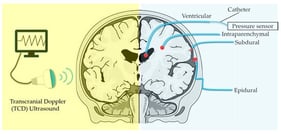
Accurate monitoring of intracranial pressure (ICP) is critical for the diagnosis and management of neurological disorders. Although various ICP sensors have been developed, their sensitivity is often limited, restricting their ability to detect subtle pressure variations. Therefore, there is a pressing need to develop ICP sensors with enhanced sensitivity to improve measurement accuracy and patient outcomes. In this paper, a highly sensitive and precise pressure sensor for intracranial pressure (ICP) monitoring was proposed. Theoretically, the beam-membrane-island structure was introduced and optimized to improve sensitivity and linearity compared to a flat membrane structure. The notches etched at beam end were designed for further improving sensitivity. Experimentally, the designed sensor achieved a sensitivity of 1.59 mV/V//kPa and a nonlinearity of −0.22% F.S. Additionally, the sensor can detect pressure with centimeter water column (cm H2O) resolution, making it suitable for ICP monitoring. This technology holds broad application prospects in the field of medical devices.

13 February 2026

Representative methods of invasive and non-invasive methods for ICP monitoring.

As a class of self-organized soft matter systems merging fluidic mobility with long-range molecular order, cholesteric liquid crystals (CLCs) possess immense potential for the development of high-sensitivity, visually tractable flexible sensors. Leveraging their unique helical superstructures and stimuli-responsive photonic bandgaps, CLCs can transduce subtle physical or chemical perturbations into discernible optical signatures, such as Bragg reflection shifts or mesomorphic textural transitions. Nonetheless, the intrinsic fluidity of CLCs often compromises their structural integrity, while conventional one-dimensional (1D) or two-dimensional (2D) confinement geometries exhibit pronounced angular dependence, significantly constraining their detection precision in complex environments. Recently, microfluidic technology has emerged as a pivotal paradigm for achieving sophisticated three-dimensional (3D) spatial confinement of CLCs through the precise manipulation of microscale fluid volumes. This review systematically delineates recent advancements in microfluidics-enabled CLC sensors. Initially, the fundamental self-assembly principles and optical properties of CLCs are introduced, emphasizing the unique advantages of 3D spherical confinement in mitigating angular sensitivity and intensifying interfacial interactions. Subsequently, the primary sensing mechanisms are bifurcated into bulk-driven sensing via pitch modulation and interface-driven sensing via topological configuration transitions. We then detail the microfluidic-based fabrication strategies and engineering protocols for diverse 3D architectures, including monodisperse/multiphase droplets, microcapsules, shells, and Janus structures. Building upon these structural frameworks, current sensing applications in physical (temperature, strain/stress), chemical (volatile organic compounds, ions, pH), and biological (biomarkers, pathogens) detection are evaluated. Lastly, in light of persistent challenges, such as intricate signal interpretation and limited robustness in complex matrices, we propose future research trajectories, encompassing the co-optimization of geometric parameters (size and curvature), artificial intelligence-enhanced automated diagnostics, and multi-field-coupled intelligent integration. This work seeks to provide a comprehensive roadmap for the design of next-generation, high-performance, and portable liquid-state photonic sensing platforms.

13 February 2026

Characteristics of CLCs: (A) helical structure, (i) nematic and (ii,iii) cholesteric (chiral nematic) LC phases [19]; (B) selective reflection of the chiral nematic (N*). The asterisk denotes chirality. [23]; (C) optical textures and helical axis orientation [19]; (D) topological defects [26]. Adapted with permission from Ref. [19], Copyright 2018 John Wiley & Sons—Books. Adapted with permission from Ref. [26]. Copyright 2012 Royal Society of Chemistry.

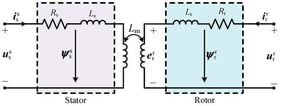
To address the low-voltage fault issue in doubly fed induction generator-motor (DFIGM) systems, this paper proposes a practically implementable cooperative control strategy that integrates an improved current reversely tracking control (CRTC) scheme with an enhanced IGBT-based active crowbar topology. The proposed method optimizes the current-tracking coefficients under rotor voltage and current constraints during LVRT operation. Meanwhile, the enhanced active crowbar provides reactive power support, thereby suppressing negative-sequence current components, mitigating harmonic distortion, and improving the power quality at the point of common coupling (PCC). A 10-MW DFIGM model is developed, and comparative studies are conducted with the conventional inductance emulating control (IEC) and the crowbar structure. The experimental results show the feasibility and effectiveness of the proposed method.

13 February 2026

The equivalent circuit of DFIGM.

News & Conferences

Issues

Open for Submission

Editor's Choice

Get Alerted

Add your email address to receive forthcoming issues of this journal.

XFacebookLinkedIn
Micromachines - ISSN 2072-666X